A century ago, Jacksonville was making movie history. This November, the city is raising a glass to it.
In the fall of 1926, The Flying Ace, a silent film produced by Jacksonville’s Norman Studios, made its debut. One hundred years later, the city’s celebrating with a series of events that bring together film, music, history and even a few cocktails straight out of the Roaring Twenties.
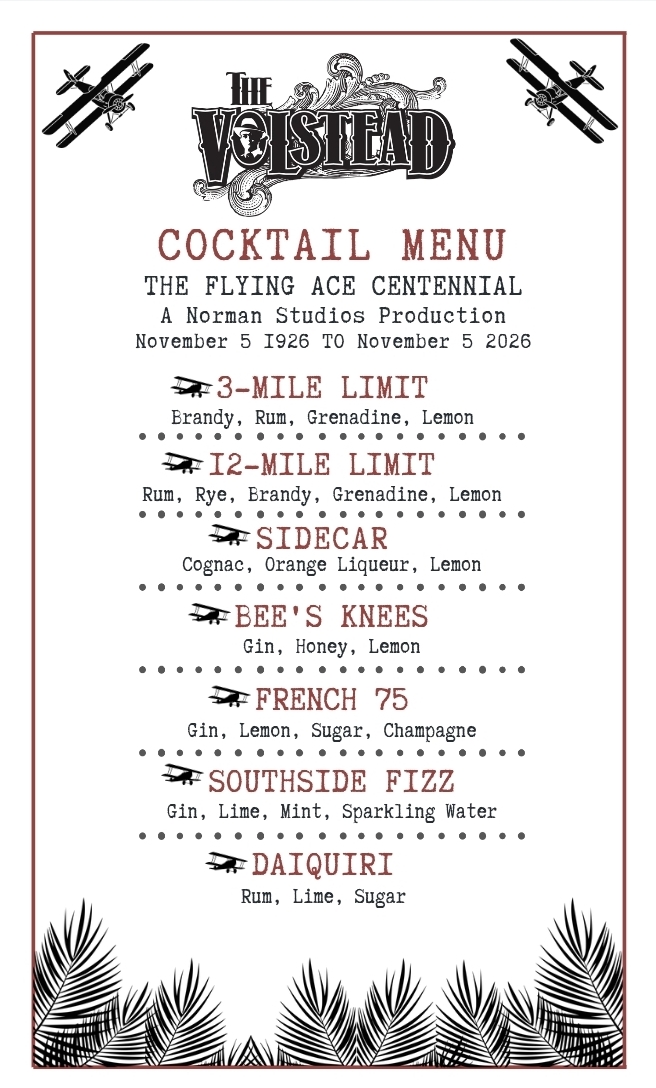
The festivities kick off November 5 at The Volstead, Downtown Jacksonville’s speakeasy-style cocktail bar, which is marking the film’s 100th anniversary with a special edition cocktail menu. It’s a fitting tribute to a film born during Prohibition, when Americans were flocking to secret watering holes, jazz was all the rage and Hollywood was still finding its voice.
And there’s some fascinating history behind the drinks.
Cocktails With a Prohibition-Era Past
The Volstead’s commemorative menu features seven classic cocktails, several with colorful connections to the 1920s.
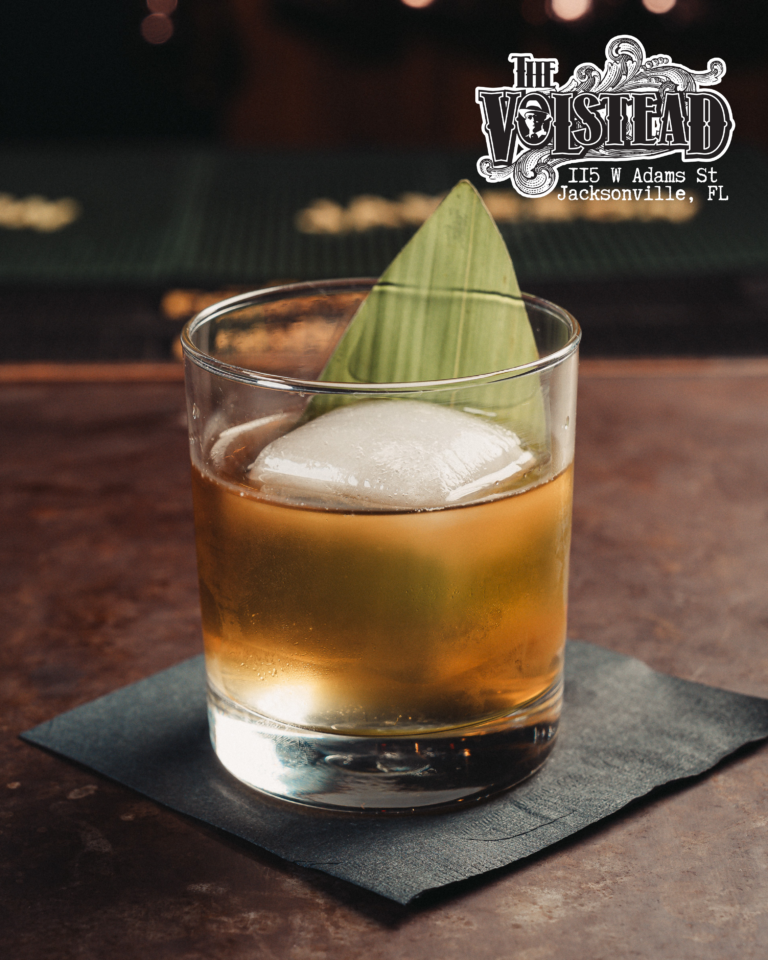 3-Mile Limit: During Prohibition, liquor-laden ships would anchor just beyond the three-mile boundary of U.S. territorial waters, where they supplied rumrunners who smuggled alcohol ashore. The cocktail even appeared in an October 1926 issue of The New Yorker, the very month before The Flying Ace premiered.
12-Mile Limit: When federal authorities extended their offshore enforcement reach from three to 12 miles in 1924, rumrunners had to change their tactics. The cocktail’s name reflects the expanded boundary, and its creation is commonly credited to journalist Tommy Millard.
Sidecar: A favorite of the Roaring Twenties, this cognac cocktail reportedly earned its name from an American military officer who arrived at his favorite watering hole in the sidecar of a motorcycle. Whether it originated in Paris or London remains a matter of spirited debate.
Bee’s Knees: In 1920s slang, something that was the “bee’s knees” was simply the best. The cocktail’s honey and lemon also had a practical purpose during Prohibition: making harsh, sometimes homemade gin a little easier to swallow.
French 75: Named for the powerful French 75mm artillery gun used during World War I, this Champagne-and-gin cocktail earned its reputation for packing a punch. The familiar recipe was published in 1927, making it another genuine Jazz Age classic.
Southside Fizz: This refreshing combination of gin, citrus, mint and sparkling water predates Prohibition, with a published recipe dating to 1916. Its origins are debated, with stories involving an exclusive Long Island sporting club and Chicago’s notorious South Side.
Daiquiri: Long before frozen, fruity variations became popular, the original Daiquiri was a simple Cuban concoction of rum, lime and sugar. Its creation is commonly credited to American mining engineer Jennings Cox in the late 1890s. By the 1920s, Cuba’s thriving cocktail culture offered Americans a welcome escape from Prohibition.
The Volstead’s special menu offers a delicious way to experience the era that gave birth to The Flying Ace, with no secret password or offshore rumrunner required.
November 11: Return to Where the Story Began
The centennial celebration continues Wednesday, November 11, at Norman Studios, where the film was produced.
The Flying Ace: Where the Story Began is a free community program exploring the history and enduring legacy of Richard Norman’s only surviving feature-length film. The evening will bring together historians, members of Norman’s family and composers behind the Jacksonville Symphony’s newly commissioned score.
The program will feature a performance by the Jacksonville Symphony Brass Quintet of Fire!, composed by Carlos Simon, followed by a panel discussion featuring Simon, fellow composers Nathalie Joachim and Kathryn Bostic, filmmaker Richard Norman’s grandson David Norman, and Norman Studios representatives Barbara Wingo and Devan Stuart Lesley.
Visitors can also tour the Norman Studios Silent Film Museum earlier in the afternoon.
The museum at 6337 Arlington Road will be open from 1:30 to 4 p.m. without registration. Doors to the Rita F. Reagan Set Building at 6360 Commerce Street open at 4 p.m., with the program beginning at 5 p.m. Admission is free, but advance registration is required for the program.
Register for The Flying Ace: Where the Story Began.
November 14: The Flying Ace Takes Flight Again
The celebration culminates Saturday, November 14, when the Jacksonville Symphony presents The Flying Ace at Jacoby Symphony Hall.

The Flying Ace
Under the direction of Music Director Courtney Lewis, the Symphony will perform the world premiere of a newly commissioned orchestral score, created collaboratively by six contemporary composers, alongside a screening of the original 1926 film.
Filmed in Jacksonville’s historic Arlington neighborhood and nearby Mayport, The Flying Ace stars Laurence Criner as Capt. Billy Stokes, a decorated World War I pilot turned railroad detective who investigates a missing payroll agent and a stolen $25,000.
Produced with an all-Black cast during an era when Hollywood routinely relegated African American performers to stereotypical roles, the film portrayed its characters with dignity, intelligence and heroism. It remains a significant piece of both Jacksonville’s film heritage and American cinema history.
Now, 100 years after its debut, the film will be accompanied by a full symphony orchestra, giving a new generation an opportunity to experience this remarkable Jacksonville story.
The performance begins at 7:30 p.m. at Jacoby Symphony Hall in the Jacksonville Center for the Performing Arts.
Purchase tickets to The Flying Ace with the Jacksonville Symphony.
Here’s to the Next 100 Years
From the clink of cocktail glasses at The Volstead to the historic grounds of Norman Studios and the soaring sounds of the Jacksonville Symphony, the centennial of The Flying Ace is a celebration of the city’s extraordinary creative past.
So raise a glass, explore the history and join Jacksonville in honoring a film that helped put the city on the cinematic map a century ago.
After all, a story 100 years in the making deserves a proper celebration.